Corsica Linea - Latest Ferry Prices, Reviews And Ships
Corsica Linea is a French ferry company that connects mainland France to Corsica and several North African destinations, including Algeria and Tunisia.
Corsica Linea plays an important role in linking these countries to France for both passengers and cargo. By connecting countries across the Mediterranean, the company supports Corsican residents and North African communities who rely on regular and reliable transport for work, family visits, and trade.
Corsica Linea wishes to become "the most modern passenger and freight transport company in the Mediterranean". It aims to achieve this by being the leader in customer satisfaction, societal commitment and environmental transition. It aims to achieve this by 2030.
Corsica Linea operates a "maritime public service delegation". This is a commitment, partially funded by the French government, to run ferries to Corsica all year. This commitment includes operating ferries from Marseille in mainland France and Bastia, Ajaccio and Propriano in Corsica.
Corsica Linea is one of the largest shipping companies in the Mediterranean, transporting around 1 million passengers and their vehicles, as well as 125,000 freight trailers annually.
| Nationality | French |
|---|---|
| Headquarters | Ajaccio |
| Ownership Type | Private limited company |
| Parent Company | Maritima Ferries |
| Foundation Date | 2016 |
Corsica Linea Promotions and Cheap Deals


Departure Board for Corsica Linea
Saturday, 11 April 2026
Latest Ticket Prices for Corsica Linea
Latest Ticket Prices for Corsica Linea
Frequently Asked Questions About Corsica Linea
Frequently Asked Questions About Corsica Linea
These are the most commonly asked questions. Can't find what you're looking for? No worries, get in touch and we'll be more than happy to assist with your enquiry.
What are the check-in times for Corsica Linea?
What are the check-in times for Corsica Linea ferries from Sete to Bejaia and Bejaia to Sete?
What are the check-in times for Corsica Linea ferries from Marseille to Ajaccio and Ajaccio to Marseille?
What are the check-in times for Corsica Linea ferries from Marseille to Skikda and Skikda to Marseille?
What are the check-in times for Corsica Linea ferries from Marseille to Algiers and Algiers to Marseille?
Corsica Linea History
Corsica Linea was created because several Corsican entrepreneurs wanted to make maritime transport between mainland France and Corsica reliable.
Below is a chronological overview of Corsica Linea's key milestones:
January 5, 2016: Corsica Linea is established by the Corsican consortium Corsica Maritima, with the aim to provide maritime services between mainland France and Corsica.
February 2016: The company commences operations with freight services between Marseille and Bastia, initially using the vessel Stena Carrier, followed by Corsica Linea Dui.
April 11, 2016: Corsica Linea acquires Maritime Corse Méditerranée (MCM), including its fleet, and integrates passenger services into its operations. This replaced the previous company SNCM.
May 3, 2016: The company officially launches under the Corsica Linea brand, inheriting six vessels from the former SNCM fleet.
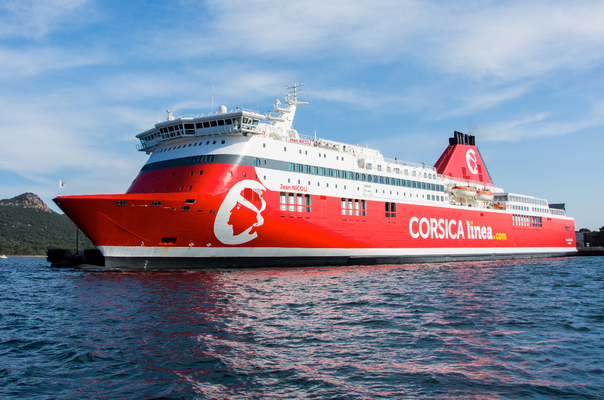
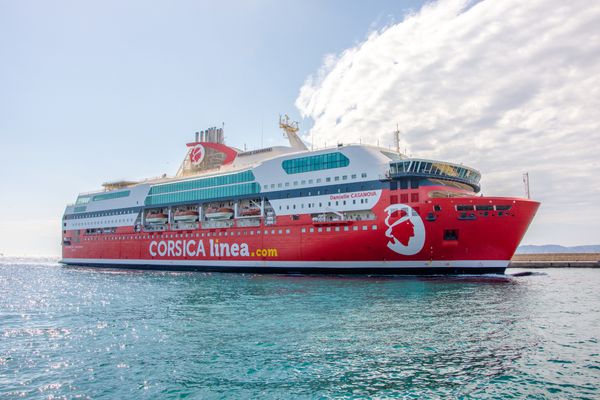
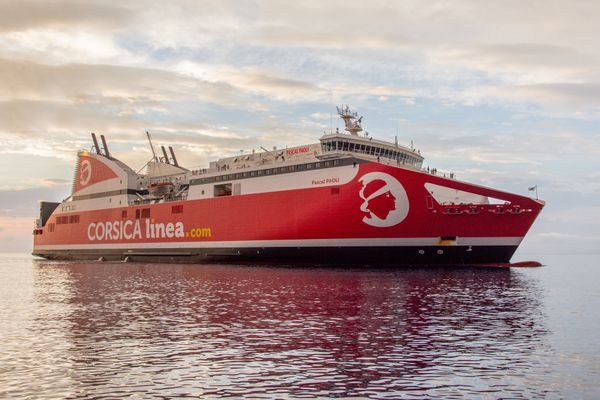
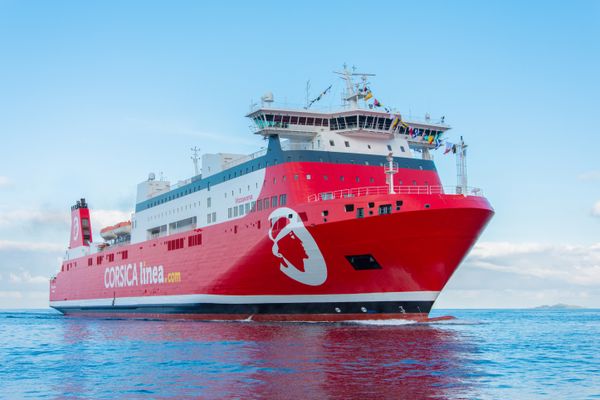
June 2016: The fleet begins adopting the new red livery, starting with the vessels Jean Nicoli, Pascal Paoli, and Danielle Casanova.
October 2016: Corsica Linea expands its services to include the port of L'Île-Rousse in Corsica.
November 2018: The company's headquarters are relocated from Marseille to Ajaccio, Corsica.
June 2018: Corsica Linea charters the vessel Vizzavona to enhance freight and passenger capacity, particularly on routes to the Maghreb and Sardinia.
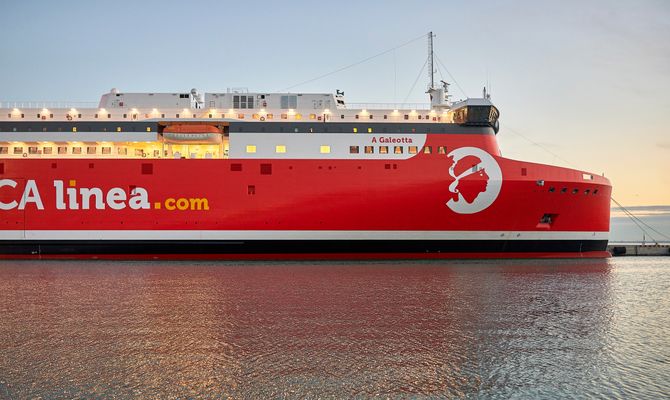
2019: The company orders its first new RoPax ferry, A Galeotta, from the Italian shipyard Cantiere Navale Visentini, marking a commitment to fleet modernization and environmental sustainability.
January 2023: A Galeotta enters service, becoming the first LNG-powered ferry operating between Marseille and Corsica, reflecting Corsica Linea's dedication to reducing environmental impact.
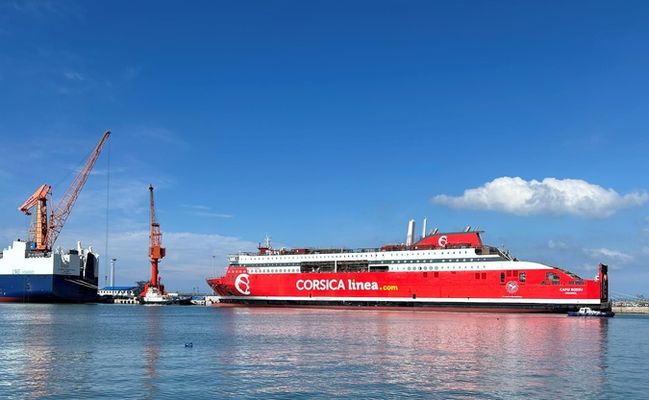
January 8, 2024: Corsica Linea signs a contract with Stena RoRo for a second LNG-powered E-Flexer vessel, scheduled to enter service in March 2026, further advancing the company's environmental objectives.
Throughout its history, Corsica Linea has focused on enhancing regional connectivity, modernizing its fleet, and committing to environmental sustainability in maritime transport.
Corsica Linea Sustainability
Corsica Linea has begun the implementation of a strategic energy transition plan, costing more than €450 million, to achieve a 40% reduction in its CO2 emissions by 2030. This plan includes the following key points:
-
Reduction in operating fuel consumption of all ships (optimization of the fleet plan, optimization of the duration of calls, lengthening of crossings to allow a slower operating speed).
-
Improvement of the energy efficiency of ships (optimization of routes, engines, propellers and hulls, reduction of energy consumption on board).
-
Increasing use of partially carbon-free fuels, such as biodiesel (produces 85% less polluting emissions).
-
Modernization of the fleet with new ships running on Liquefied Natural Gas (this produces a reduction in emissions and fine particles: -95% sulphur oxide (SOx), -85% nitrogen (Nox), -20% CO2 compared to traditional fuel).
-
Incorporation of carbon-free fuels when they become available, such as BioLNG (liquefied biomethane produced from organic materials such as waste) and e-LNG (e-methane, electro-fuel).
-
Electrical connection of ships (shore power) when they reach the port docks, to improve air quality during stopovers.
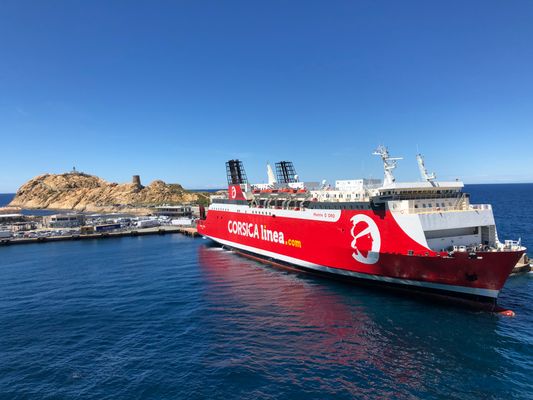
Corsica Linea Ships

Corsica Linea Routes
Routes to Algeria
Routes to France
Routes to Tunisia
Reviews for Corsica Linea
Reviews for Corsica Linea
Good quality
Good quality
Unjustified delay at departure, however…
Unjustified delay at departure, however the arrival was on time.
Thank you Corsica
Thank you Corsica